More Than a Saree—A Legacy Woven in Silk
Discover the heritage, craftsmanship and timeless beauty behind India's iconic Banarasi sarees.
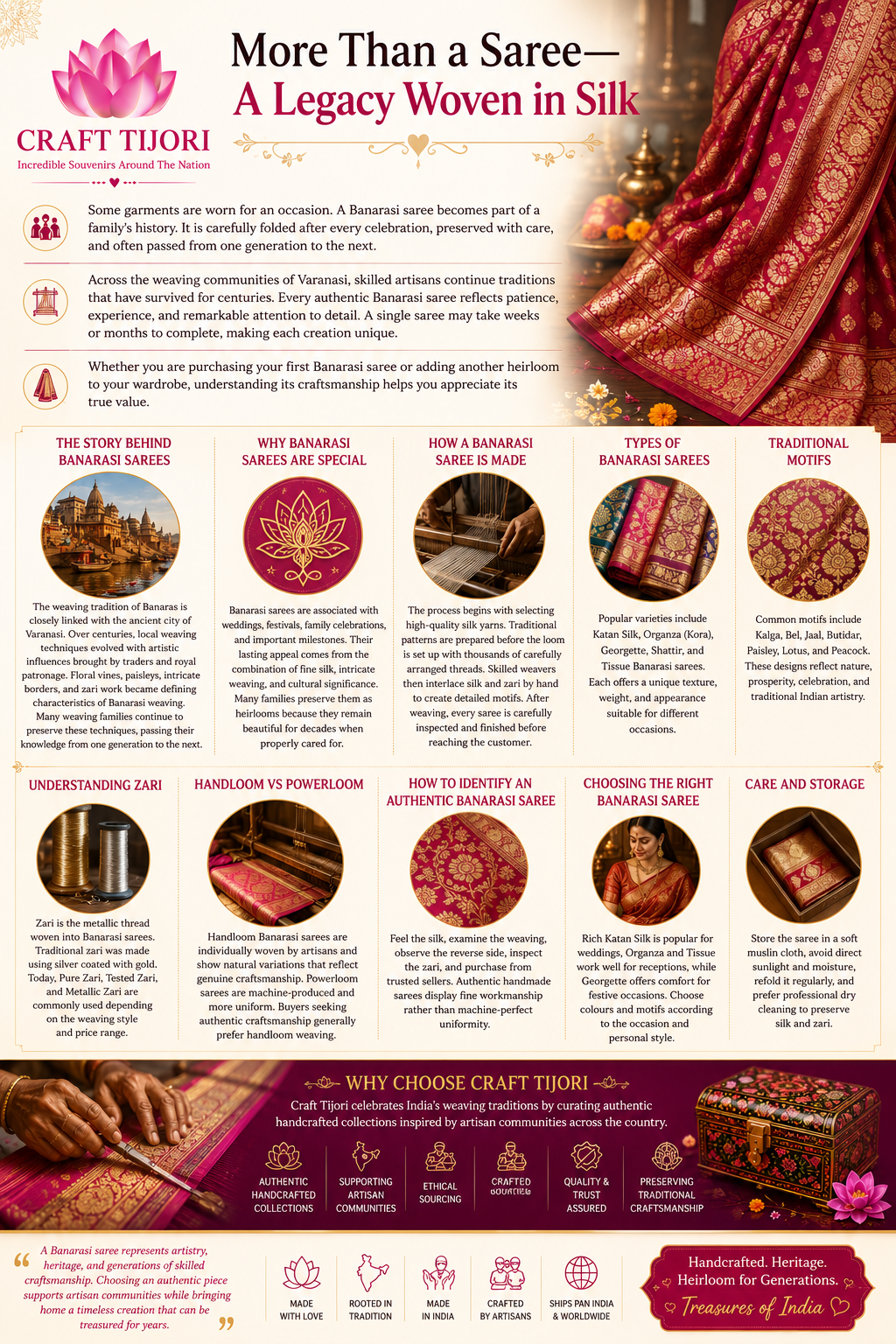
Across the weaving communities of Varanasi, skilled artisans continue traditions that have survived for centuries. Every authentic Banarasi saree reflects patience, experience, and remarkable attention to detail. A single saree may take weeks or months to complete, making each creation unique.
Whether you are purchasing your first Banarasi saree or adding another heirloom to your wardrobe, understanding its craftsmanship helps you appreciate its true value.
A Banarasi saree represents more than fabric and design. It brings together generations of weaving knowledge, artistic traditions and the cultural heritage of Varanasi.
The Story Behind Banarasi Sarees
The weaving tradition of Banaras is closely linked with the ancient city of Varanasi. Over centuries, local weaving techniques evolved with artistic influences brought by traders and royal patronage.
Floral vines, paisleys, intricate borders, and zari work became defining characteristics of Banarasi weaving. Many weaving families continue to preserve these techniques, passing their knowledge from one generation to the next.
Why Banarasi Sarees Are Special
Banarasi sarees are associated with weddings, festivals, family celebrations, and important milestones. Their lasting appeal comes from the combination of fine silk, intricate weaving, and cultural significance.
Many families preserve them as heirlooms because they remain beautiful for decades when properly cared for.
How a Banarasi Saree Is Made
The process begins with selecting high-quality silk yarns. Traditional patterns are prepared before the loom is set up with thousands of carefully arranged threads.
Skilled weavers then interlace silk and zari by hand to create detailed motifs. After weaving, every saree is carefully inspected and finished before reaching the customer.
Types of Banarasi Sarees
Katan Silk
Known for its rich silk texture and elegant appearance, making it popular for weddings and special occasions.
Organza (Kora)
Lightweight and refined, often chosen for elegant receptions and festive occasions.
Georgette
Offers a lighter feel and comfortable drape for festive and celebratory wear.
Shattir & Tissue
Distinctive varieties appreciated for their texture, finish and decorative appeal.
Traditional Motifs
Common motifs include Kalga, Bel, Jaal, Butidar, Paisley, Lotus, and Peacock. These designs reflect nature, prosperity, celebration, and traditional Indian artistry.
Understanding Zari
Zari is the metallic thread woven into Banarasi sarees. Traditional zari was made using silver coated with gold. Today, Pure Zari, Tested Zari, and Metallic Zari are commonly used depending on the weaving style and price range.
Handloom vs Powerloom
Handloom Banarasi sarees are individually woven by artisans and show natural variations that reflect genuine craftsmanship. Powerloom sarees are machine-produced and more uniform.
Buyers seeking authentic craftsmanship generally prefer handloom weaving.
How to Identify an Authentic Banarasi Saree
Feel the silk, examine the weaving, observe the reverse side, inspect the zari, and purchase from trusted sellers. Authentic handmade sarees display fine workmanship rather than machine-perfect uniformity.
Choosing the Right Banarasi Saree
Rich Katan Silk is popular for weddings, Organza and Tissue work well for receptions, while Georgette offers comfort for festive occasions. Choose colours and motifs according to the occasion and personal style.
Care and Storage
Store the saree in a soft muslin cloth, avoid direct sunlight and moisture, refold it regularly, and prefer professional dry cleaning to preserve silk and zari.
Why Choose Craft Tijori
Craft Tijori celebrates India's weaving traditions by curating authentic handcrafted collections inspired by artisan communities across the country.
Our commitment is to quality, authenticity, ethical sourcing, and preserving traditional craftsmanship.
Conclusion
A Banarasi saree represents artistry, heritage, and generations of skilled craftsmanship. Choosing an authentic piece supports artisan communities while bringing home a timeless creation that can be treasured for years.
Explore More Craft Tijori Blogs
Discover the stories, traditions and craftsmanship behind India's finest handicrafts.
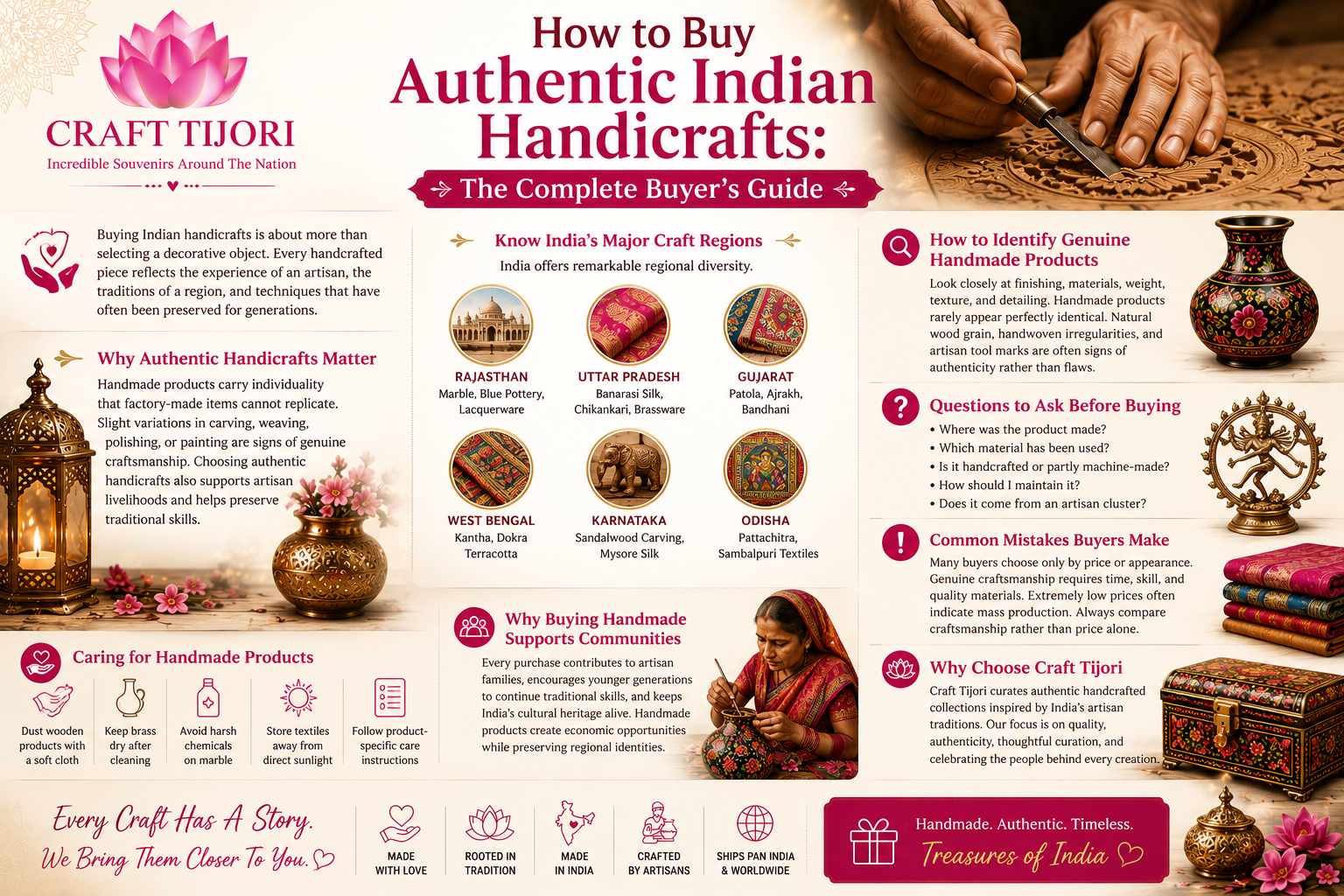
More Than a Saree—A Legacy Woven in Silk
Discover the heritage, craftsmanship and timeless beauty of authentic Banarasi sarees.
Read MoreCorporate Gifting With Indian Handicrafts
Explore thoughtful handcrafted gifts that create meaningful professional relationships.
Read More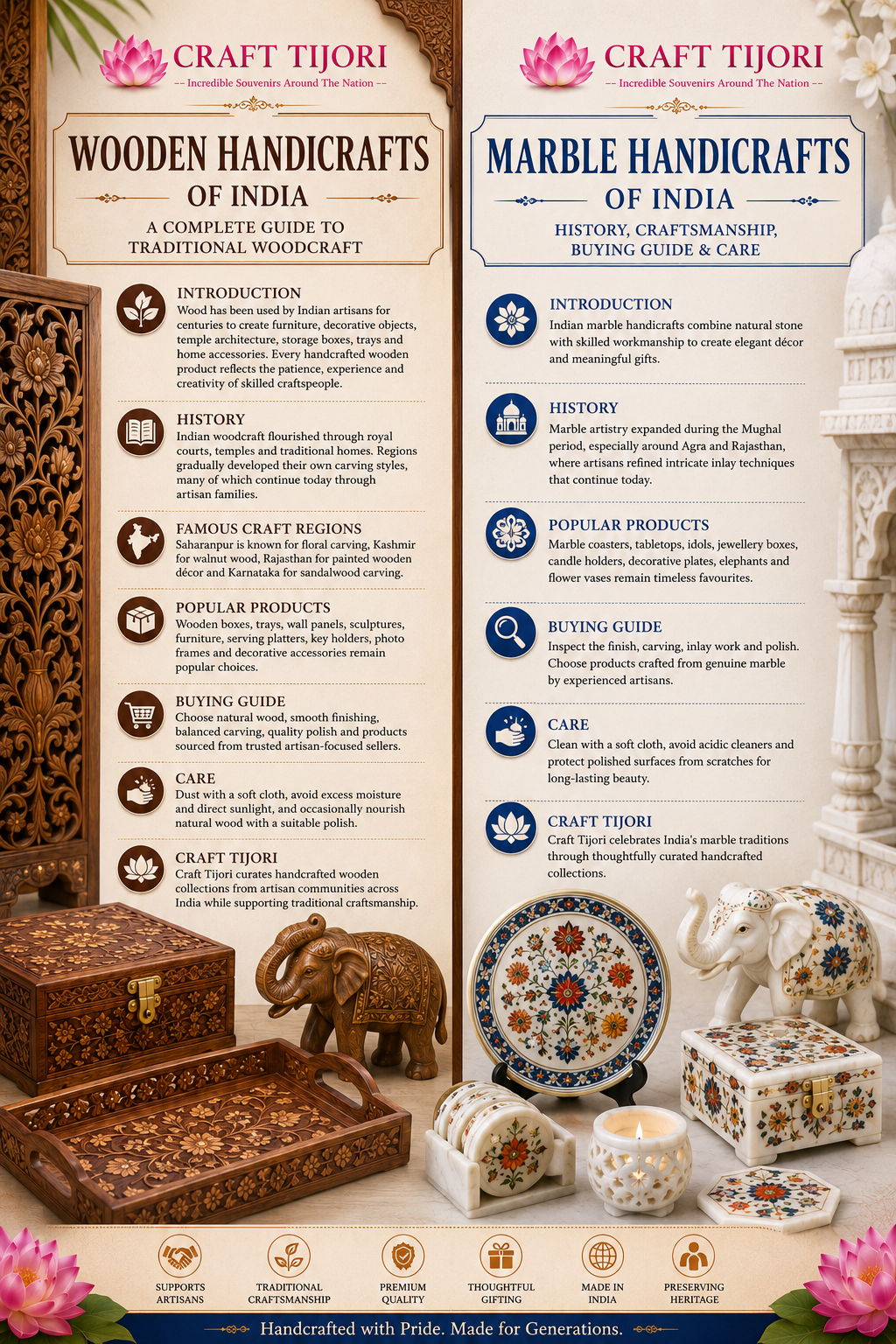
Wooden Handicrafts of India
Learn about traditional Indian woodcraft, famous regions, products, buying guide and care.
Read More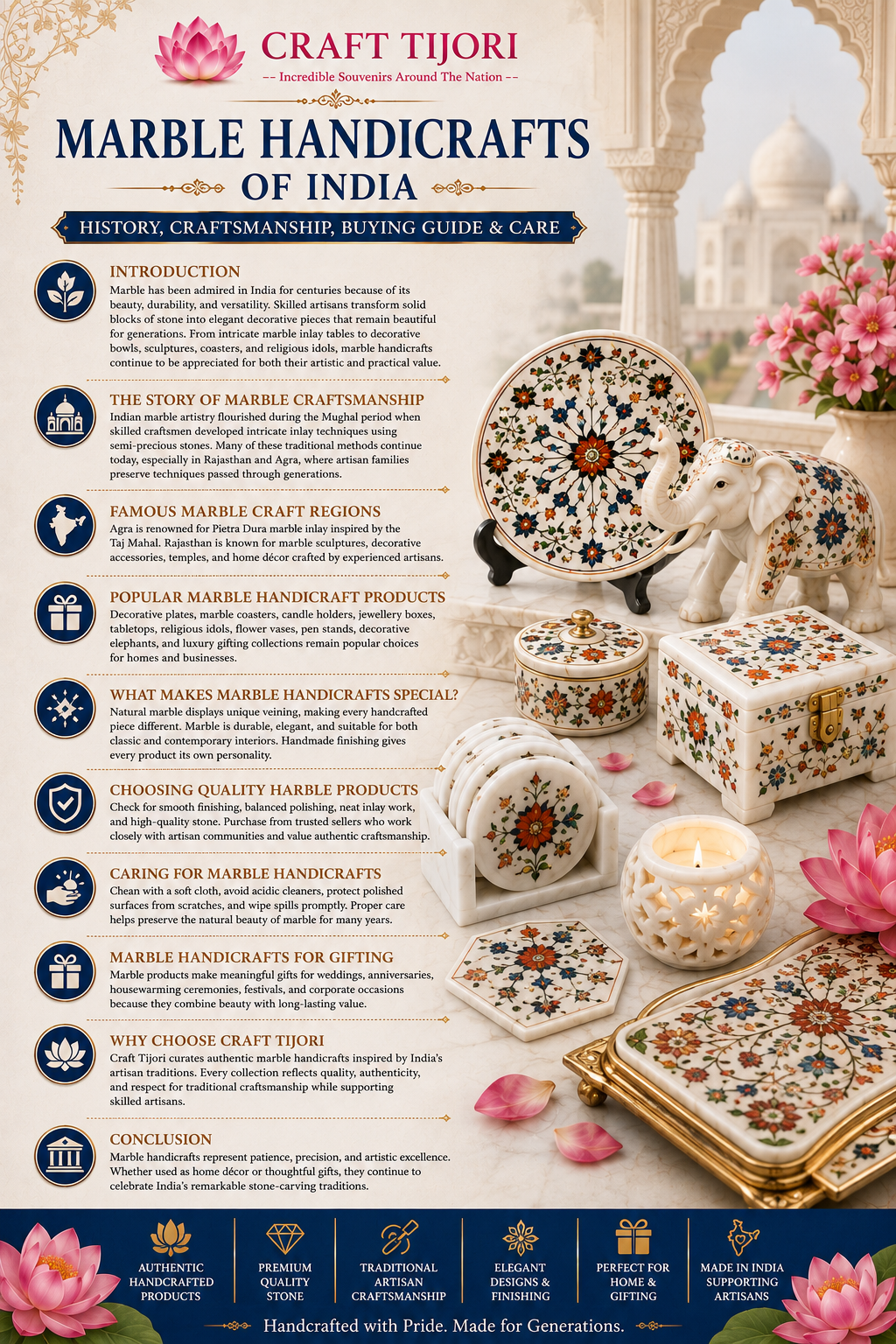
Marble Handicrafts of India
Explore India's marble traditions, craftsmanship, buying guide and care.
Read MoreHow To Buy Authentic Indian Handicrafts
A complete buyer's guide to recognising authentic handmade Indian craftsmanship.
Read More